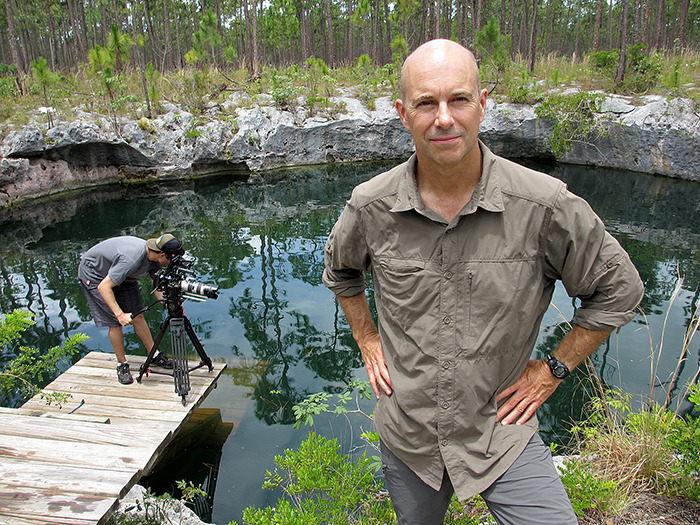
This week we start putting up our old shows on YouTube. A full episode every Monday. Free to watch.
We’ve made documentaries for broadcasters like Discovery Channel and National Geographic for more than 30 years. Most of those films aired a few times and then sat on a shelf. On Sunday afternoon we sat down to talk about why we’re putting them out now and about some of the places they took us. Here is part of that conversation, lightly edited.
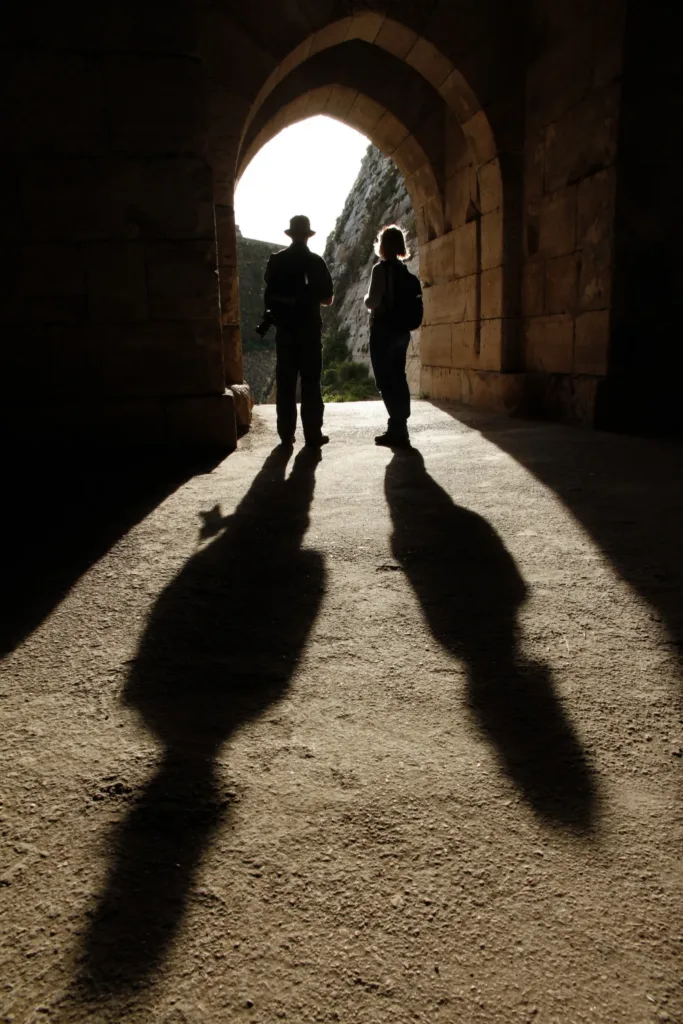
Ian, why now?
Ian: We have time. We’ve stopped making new shows. These ones are sitting on a shelf. A digital shelf.
Then came HMCS Robert Hampton Gray. The ship was named and commissioned over the last year. We put up a few clips. Those posts did well on Facebook and YouTube. That gave us real incentive to get the rest of the library out.
These shows were made for an international audience. They weren’t huge breakout hits. They were Steady Freddy. Good entertainment. Really well done. Decent budgets. We never slid into the reality TV stuff. This is solid documentary in the traditional sense. So let’s get it out there.
If you missed it, you missed it.
Maija: It’s been fun going down memory lane with all these shows. I did a rough count. We’ve filmed in about 30 countries outside Canada. Every show had something. A shot that was really hard to get for whatever reason.
When a show first aired the broadcaster might have the rights for five years. But the chance of anyone seeing a particular show on a given channel was pretty small. In those days if you missed it, you missed it.
This is the first time we’re putting them out as our own. A show might run 45 minutes but take us a year or two. Sometimes three. Thousands of hours of filming, travelling, editing and writing. They were all handcrafted. There are so many great backstories. Now we can tell them.
Ian: The broadcasters had a lot of say in the topics. They also controlled where, when and how often a show aired. After a few airings they shelved it. They had it for three or four years and it never saw the light of day again. Now we can share it with anyone who can get on YouTube.
Maija: We can’t put everything up yet. Broadcasters still hold the rights to a lot of our more recent shows. So this is the older Parallax archive plus Season One of Hell Below.
Discovery Dan
Maija: I’m proud these shows were on Discovery Channel back when Discovery was an amazing platform for a certain kind of storytelling. Remember Discovery Dan? He was smarter than the average bear and really curious about his world. Our shows were made to feed that person.
Ian: Back then this content was hitting the right platform. Now those channels are diluted and split into subchannels. It’s lost in the noise. So this brings the Discovery Dan content into one spot where we talk to that person.
Maija: One of my favourite comments came from someone at History Channel. They told us: “You guys are too history for History.” I thought: Oh my goodness. The landscape has changed.
Ian: They lost the thread. Everybody went into reality. We managed to stay away from that. Thanks to National Geographic.
Maija: Into the Death Zone was our first series. It aired on Discovery in Canada. Then National Geographic International picked it up. That was 2000. So we’ve worked with Nat Geo for 26 years. It’s been our longest broadcaster relationship and a really positive one.
Ian: Our Nat Geo team in London was Hamish Mykura, Sue Davidson and Ben Noot. They invested not just in the content but in us as filmmakers. That let us guide viewers through the engineering or the military campaign.
Maija: Our last ten years have been so prolific and so creatively satisfying. That is a complete credit to National Geographic.
Is there a place that stands out?
Ian: Russia. Our first film as Parallax was about grizzly bears in Kamchatka. The area had been closed for decades because of a submarine base. Hardly anyone had been in there. The bears were really big and beautiful.
Then Alberta for Blowdown. I saw a part of Canada I don’t often get to see. And the people were amazing. So talented and hardworking.
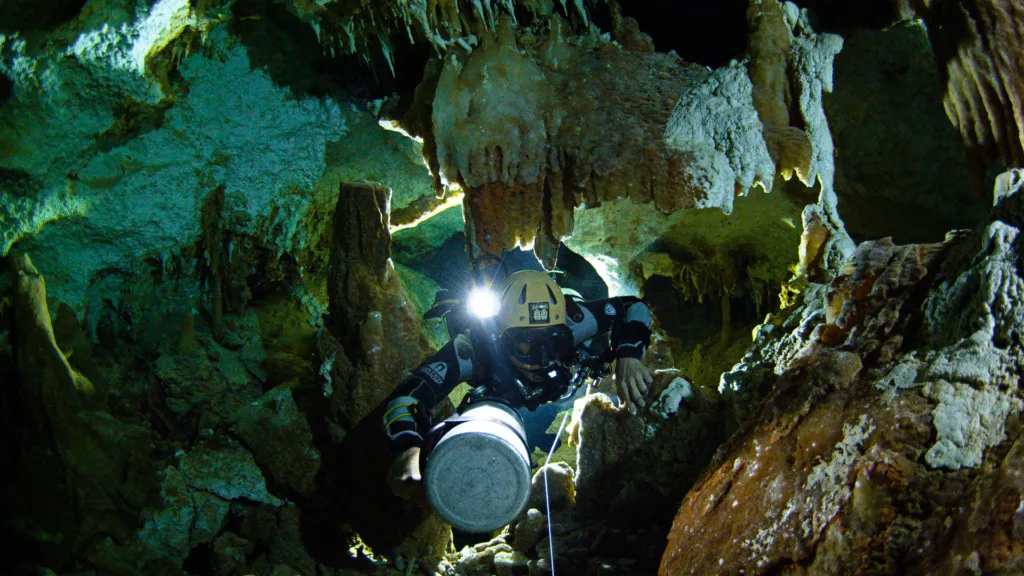
And the Bahamas. We shot more than 100 days over a year. All outside the tourist track. You think of the Bahamas as all-inclusives. We went outside those walls. These shows got us into places most people never get to see.
What’s the craziest place you’ve put a camera?
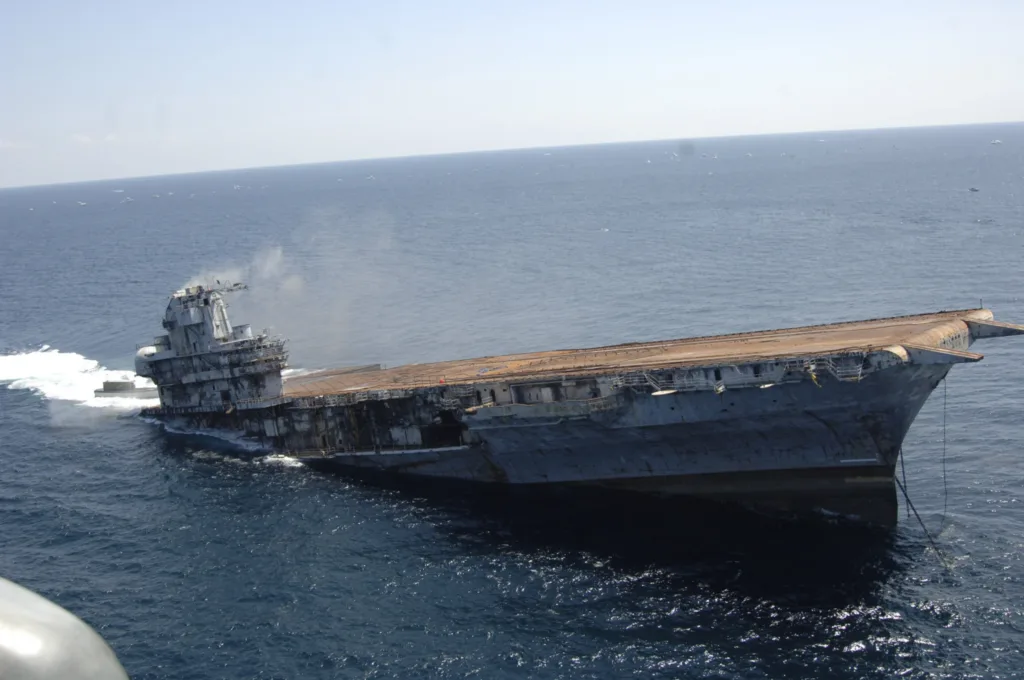
Ian: It started with Sinking an Aircraft Carrier. We mounted three cameras on USS Oriskany as it sank. Back then there was no wireless. Somebody had to go in afterwards and get them.
On the carrier only one of our cameras survived. The US Navy had a big recording setup on the deck in a floating box full of electronics. The explosion lifted it up, smashed it on the deck and shut it all down. Our little drugstore camera in a tube was the one that survived.
Ian: Then we took that into the Blowdowns. We had cameras ride the rubble down as the buildings exploded. Sean White and the team put drugstore camcorders in a box with a recorder. They zap-strapped and duct-taped it inside a tire so it would survive the fall. These were one-off events worth millions. We always got the shot.
Maija: We have to add the eagle. We did a show about urban bald eagles. There was a rehabilitated eagle that was trained to fly off and come back. We put a camera on it. So we have footage of the city from the eagle’s point of view.
Ian: We weren’t pretending it was a drone. It’s an eagle with a camera on it. This is what the eagle sees.
The hardest shoot?
Maija: You’d probably go back to the Grizzlies.
Ian: It was hard on so many levels. The Cold War had just ended and the peninsula had just opened up. It’s about the size of Vancouver Island. Getting into the country with our equipment was hard.
The biologist guiding us was an outspoken critic of the trophy hunting there. Big money. North Americans flew in to hunt. The Russian officials and local oligarchs came after him and us. At one point we were interrogated. A bottle of Crown Royal came out and smoothed things over. It bought us two weeks before we were going to be thrown out of the country. We got everything done in those two weeks.
Over eight weeks I shot only eleven and a half hours of footage. Every frame was precious.
Maija: And you shot it on film. You don’t know if it’s in focus. You don’t know anything until much later.
Ian: It was months after we finished. Each roll holds less than ten minutes. I’d run through the airport with a backpack full of film to make my gate. Coming out through Alaska they wanted to check the film. Somehow I talked them out of it. It was really close to being lost right there.
Maija: Our blowdown crews had their own airport problem. They’d spend weeks with a demolition team. Then airport security would swab their bags for explosives.
Ian: Back then the explanations seemed to pass.
Sen Toku
Ian: Sen Toku was another tough one. We found Japanese submarines at the bottom of the sea off Nagasaki. The Americans sank them on April 1, 1946 during Operation Roads End. We had one of the first ROVs. It ran on a cable about 600 feet down. It got tangled around the conning tower. It was a miracle that Brett Phaneuf was able to guide it out with the footage.
Maija: And we’d rented that ROV. If we’d lost it we’d have had quite the insurance claim. It had to be shipped ahead to Nagasaki. It had to get onto a boat that would take it and arrive in good shape.
Ian: I remember telling Brett: if this thing gets tangled, make sure we get really good footage. If we’re going to lose it, let’s go out in a blaze of glory.

What’s changed since you filmed?
Maija: The shows are time capsules. Years after Blow Out I talked to Maurice Engman from Key Safety. He said: “Maija, we’ve not had a gas well fire since.” If we hadn’t been filming that day we wouldn’t have had that episode. And we only had three in the Series! We would have had to find something completely different.
I checked my messages after coming back from a long weekend wedding and called Ian. Something had finally happened. He left the next morning and we shipped a camera out after him.
Ian: There aren’t many–if any–other films from inside a gas well fire. We caught the end of an era. Safety has taken over in these jobs, thank goodness. They’re still dangerous but the safety around them is immense.
Maija: Salvage Divers came from a newspaper story. The ship, New Carissa had wrecked off the coast of Oregon. I phoned one of the contractors. He said sure, come down. These days nobody would let us anywhere near it.
I think of Salvage Divers as a bit like Romeo and Juliet. Every time I watch it I want the ending to be different. Spoiler alert, it’s one of the few shows we made where things didn’t go the team’s way.
Ian: Man against nature. As Joe Coyne said: you can’t have hubris in the face of nature. Nature always wins.
Maija: It took courage from that Discovery Team. These were real stakes and real outcomes.
Ian: We didn’t manufacture anything. We just documented. Those teams let us in the room when things weren’t going their way. They let us see them as regular people trying to do a really tough job. Today these stories happen behind a veil and a PR team. You can’t get near them. That’s why I’m so excited to share these.
Maija: I hope we’ve done those teams credit.
What’s coming?
Maija: A full episode from the archive every Monday plus some smaller pieces as we go. First up is Sinking an Aircraft Carrier. It did really well when it came out. Why do you think it had that appeal?
Ian: Anything with the words “aircraft carrier.” And a carrier is designed to be unsinkable. So reverse-engineering that captures everybody’s imagination.
Maija: It was so complicated. It was towed from Texas to Pensacola. There were so many chances for things to go wrong. That it worked out in the end was quite a miracle.
Follow up at our Youtube Channel to catch all the updates.
You can watch Sinking an Aircraft Carrier here.